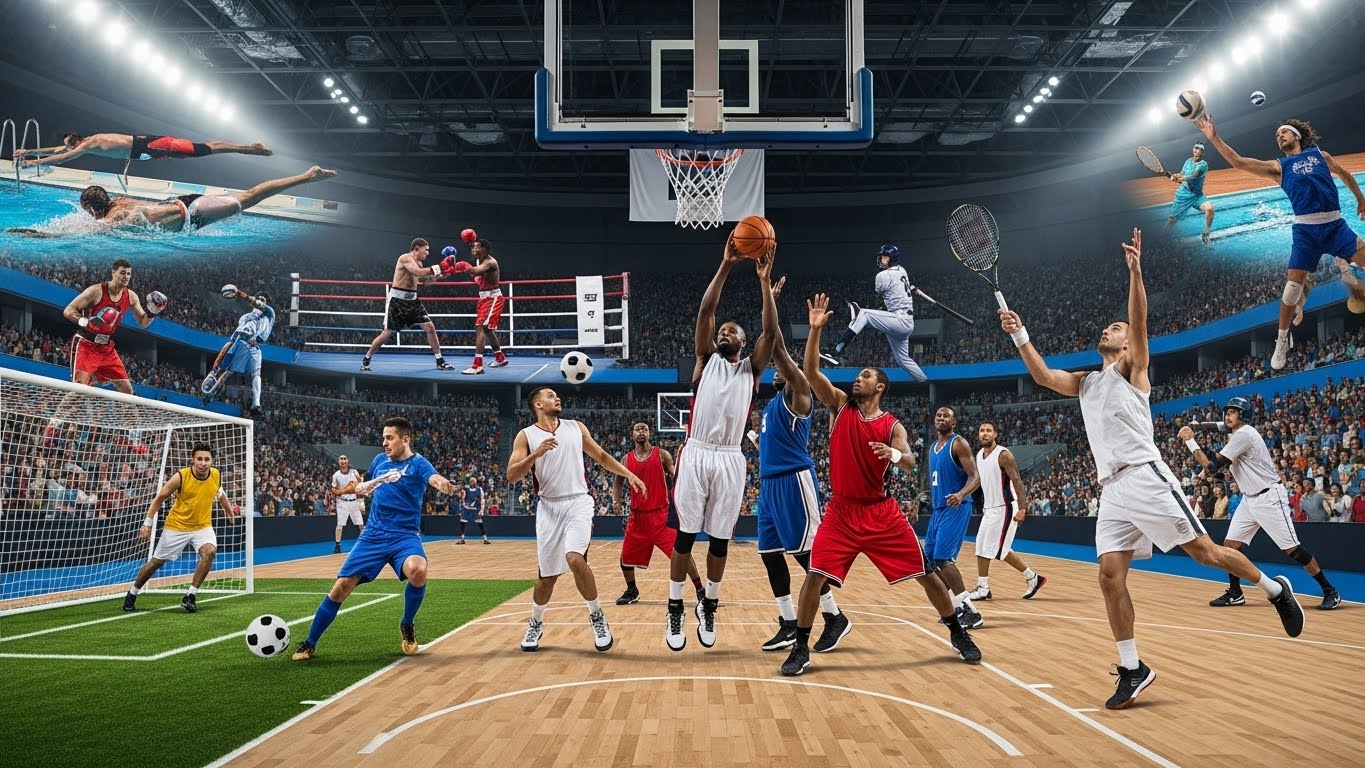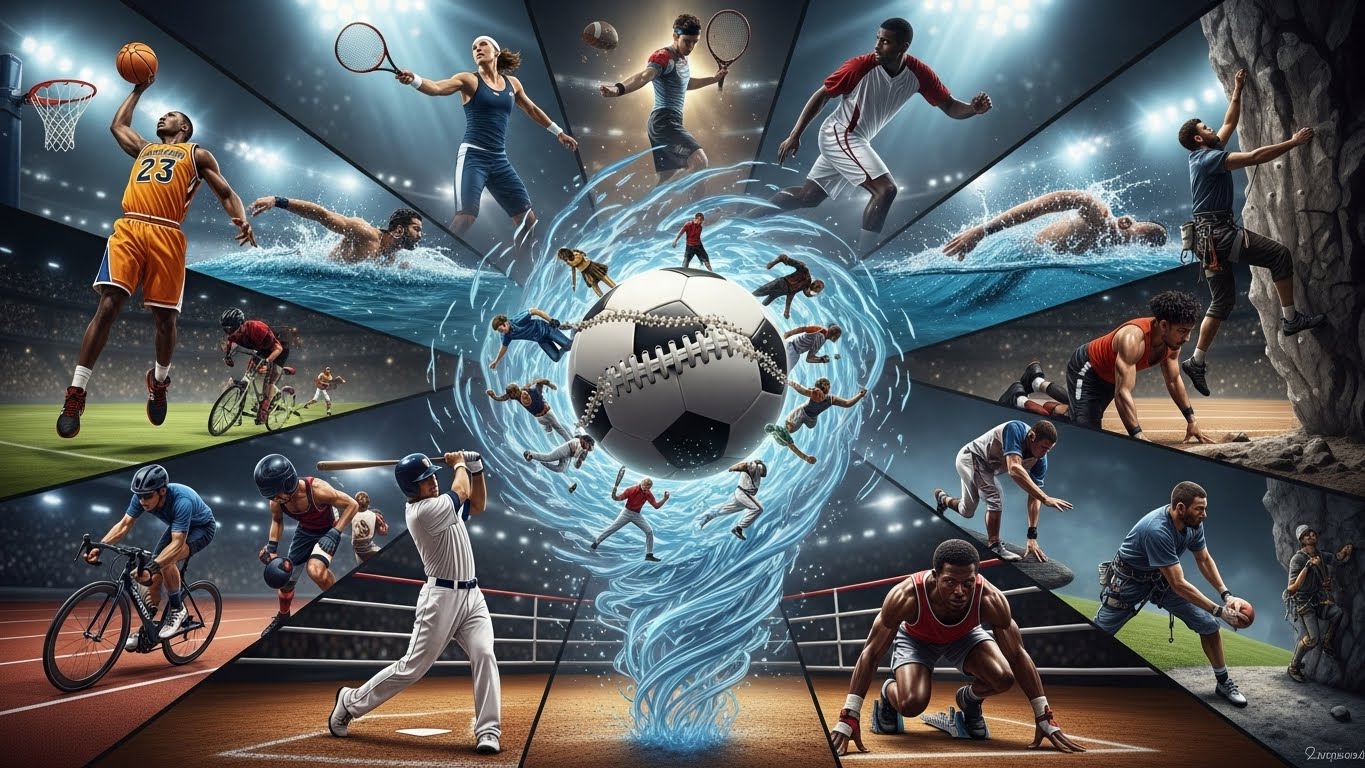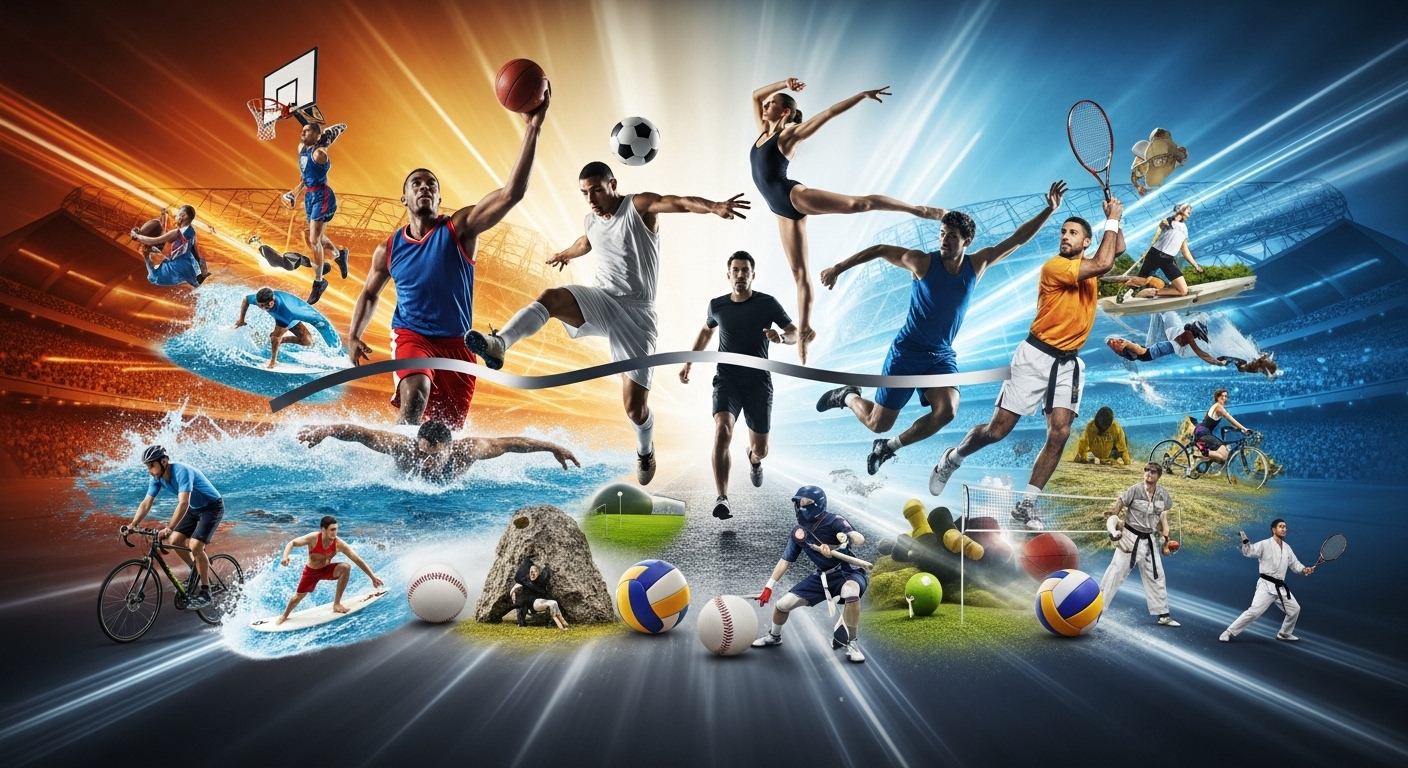

Sports have always been a fundamental part of human culture. From ancient gladiatorial contests in Rome to today’s massive global events like the Olympics and the FIFA World Cup, sports have evolved into a universal language that transcends borders, races, and beliefs. It is one of the few things in the world that can unite millions of people, evoke deep emotions, and inspire generations. The evolution of sports over centuries reflects not only physical prowess but also the social, economic, and technological progress of humankind.
The Origins of Sports: From Survival to Celebration
The earliest forms of sports can be traced back to prehistoric times when humans engaged in physical competitions for survival. Hunting, running, and throwing were essential skills that later evolved into competitive activities. Ancient civilizations such as Egypt, Greece, and China integrated sports into their cultural and religious practices. The Olympic Games, which originated in ancient Greece around 776 BC, stand as the most iconic symbol of early sportsmanship.
Sports in these eras were not just about entertainment; they carried spiritual and cultural significance. For instance, the Mayan and Aztec ball games were often linked to ritual sacrifices, reflecting the intertwining of faith and athleticism. Similarly, ancient Egyptian paintings depict wrestlers and swimmers, showcasing the importance of physical fitness in society. These early traditions laid the foundation for what would later become organized sports.
Sports as a Reflection of Society
Throughout history, sports have mirrored societal changes. In medieval Europe, jousting and archery represented the valor and discipline of knights. In contrast, traditional Asian martial arts embodied philosophical principles such as discipline, respect, and harmony.
As societies modernized, sports began to symbolize national pride and identity. The Industrial Revolution of the 18th and 19th centuries brought massive social changes, including the rise of urbanization and leisure time. People began forming clubs, leagues, and associations. The codification of rules transformed casual games into formalized sports such as football (soccer), cricket, rugby, and baseball. Sports became not just a pastime but a structured industry.
The Birth of Modern Sports Organizations
By the late 19th and early 20th centuries, international sports bodies began to emerge. The revival of the modern Olympic Games in 1896 marked a turning point in global sports culture. The establishment of organizations such as FIFA, the International Cricket Council, and the International Association of Athletics Federations standardized rules and fostered international competition.
This era also witnessed the democratization of sports. What was once a privilege of the elite became accessible to the masses. Schools and universities began incorporating sports into their curricula, emphasizing teamwork, leadership, and discipline. The world saw the emergence of legendary figures such as Jesse Owens, Babe Ruth, and Pelé, whose achievements transcended national boundaries and became global inspirations.
The Rise of Professionalism in Sports
The 20th century marked the dawn of professional sports. Athletes were no longer amateurs competing for glory alone; they became full-time professionals earning livelihoods through their talents. The introduction of sponsorships, endorsements, and broadcast deals transformed sports into a multibillion-dollar industry.
Television played a crucial role in this transformation. Events like the 1966 FIFA World Cup, the 1980 “Miracle on Ice,” and Muhammad Ali’s boxing matches reached millions of households, turning athletes into celebrities and inspiring fans across the globe. The rise of sports journalism and commentary created a deeper connection between athletes and audiences, making sports an integral part of everyday life.
The Role of Sports in National Identity
Sports often act as a unifying force within nations. Victories in international competitions can uplift national morale, while defeats can trigger introspection and change. For many countries, sports serve as a way to assert their presence on the global stage.
For example, cricket in India is more than just a game—it’s a cultural phenomenon that bridges diverse languages, religions, and regions. Similarly, football in Brazil reflects the country’s creativity and joy of life. The United States, with its love for baseball, basketball, and American football, showcases its values of competition, innovation, and resilience.
Sports diplomacy has also played a vital role in easing political tensions. The famous “Ping Pong Diplomacy” between the United States and China in the 1970s opened doors for diplomatic relations. Similarly, international events like the Olympics often encourage peace and cultural exchange.
The Impact of Technology on Sports
Technology has revolutionized every aspect of sports—from training and performance analysis to broadcasting and fan engagement. Wearable devices, GPS trackers, and AI-powered analytics help coaches and athletes monitor performance with unprecedented precision. High-speed cameras and VAR (Video Assistant Referee) systems ensure fair play, while advanced medical technology enhances recovery and injury prevention.
Broadcasting has also evolved dramatically. With the rise of the internet and streaming platforms, fans can watch live events from any corner of the world. Virtual and augmented reality experiences allow audiences to engage with sports in immersive new ways. Social media platforms have given athletes direct access to fans, allowing them to build personal brands and share their journeys beyond the field.
Women in Sports: Breaking Barriers and Making History
For centuries, women faced societal and institutional barriers in the world of sports. However, the 20th and 21st centuries have seen a monumental shift toward gender equality. Pioneers such as Billie Jean King, Serena Williams, Simone Biles, and Megan Rapinoe have redefined what it means to be a female athlete.
Women’s participation in the Olympics and professional leagues has expanded dramatically, inspiring future generations. Today, women’s sports are gaining more recognition, sponsorship, and viewership than ever before. Despite ongoing disparities in pay and representation, the momentum toward equality continues to grow, fueled by advocacy and public support.
The Economics of Sports
The global sports industry is one of the largest sectors of the economy. It encompasses broadcasting rights, merchandising, sponsorships, ticket sales, and tourism. Major events like the Olympics, FIFA World Cup, and Super Bowl generate billions in revenue and create employment opportunities across various sectors.
Sports franchises have become global brands. Clubs like Manchester United, Real Madrid, and the New York Yankees are not just teams—they are business empires. The commercialization of sports has also led to new challenges, such as the influence of money on decision-making and the ethical concerns surrounding endorsements and betting. Nonetheless, the economic power of sports continues to drive innovation and global connectivity.
Sports and Education: Building Character and Leadership
Sports are more than physical competition—they are tools for education and character development. Participation in sports teaches essential life skills such as teamwork, discipline, resilience, and leadership. Educational institutions around the world emphasize sports as a vital part of holistic development.
Team sports like football, basketball, and hockey cultivate cooperation and communication, while individual sports like tennis, athletics, and swimming foster self-reliance and focus. Many successful leaders in various industries attribute their confidence and problem-solving skills to lessons learned through sports.
The Psychology of Sports: The Mind Behind the Performance
Behind every great athlete lies immense mental strength. Sports psychology has become a vital field, helping athletes manage pressure, anxiety, and motivation. The mental aspect often separates good athletes from great ones.
Visualization techniques, mindfulness, and goal setting have proven to enhance performance. Mental health awareness has also gained attention in recent years, with athletes like Naomi Osaka and Michael Phelps speaking openly about their struggles. Their courage has helped break the stigma and emphasized the importance of mental well-being in sports.
The Role of Fans and Sports Culture
Fans are the heartbeat of sports. Their passion, loyalty, and emotional investment give sports their soul. From roaring stadiums to vibrant fan communities online, the energy of fans transforms sports events into unforgettable experiences.
Sports culture varies globally. In Europe, football is almost a religion, while in the United States, the Super Bowl is one of the most-watched events annually. In Asia, cricket and badminton command massive followings. The rituals, chants, jerseys, and celebrations all contribute to a sense of belonging and identity among fans.
The connection between athletes and fans is now more personal, thanks to social media. Athletes share behind-the-scenes moments, training routines, and personal stories, bridging the gap between the field and the audience.
Sports and Social Change
Sports have often been a platform for social justice and equality. Iconic moments such as Muhammad Ali’s stand against racial discrimination, Tommie Smith and John Carlos’s Black Power salute at the 1968 Olympics, and Colin Kaepernick’s protest against police brutality have turned sports into a stage for activism.
Athletes possess immense influence, and many use their platforms to raise awareness about issues such as racism, gender inequality, and environmental sustainability. Organizations are also recognizing their social responsibilities by promoting diversity, inclusion, and community engagement. Sports, in this sense, continue to be a force for progress and empowerment.
The Future of Sports: Innovation and Globalization
As the world becomes more interconnected, sports continue to evolve at an astonishing pace. E-sports, or competitive video gaming, has emerged as a new frontier, attracting millions of viewers and professional players. Virtual competitions and online tournaments challenge traditional notions of athletics and open doors for new forms of competition.
Technology like AI, blockchain, and augmented reality will further reshape how sports are played, consumed, and monetized. Smart stadiums, biometric tracking, and interactive fan experiences will redefine engagement. However, amid all these advancements, the core spirit of sports—fairness, perseverance, and unity—will remain unchanged.
The Environmental Responsibility of Sports
As awareness about climate change grows, the sports industry faces pressure to adopt sustainable practices. Massive events often generate significant carbon footprints, but recent efforts show positive change. Stadiums are being built with renewable energy systems, recycling programs, and eco-friendly materials.
Athletes and organizations are also advocating for environmental causes. The Olympic Committee and several football clubs have initiated programs to reduce waste, promote renewable energy, and educate fans about sustainability. This intersection of sports and environmental responsibility demonstrates the industry’s potential to lead by example.
Challenges Facing the World of Sports
Despite its progress, the world of sports faces numerous challenges. Doping scandals, corruption, gender inequality, and commercialization continue to threaten its integrity. Balancing entertainment with ethics is an ongoing struggle.
The rise of social media has also introduced new pressures. Athletes now face public scrutiny beyond their performances, and controversies can escalate quickly. Maintaining mental health, authenticity, and professionalism in such a digital age requires immense strength.
Additionally, access to sports remains unequal in many regions due to poverty, lack of infrastructure, or political instability. Global efforts to promote inclusivity and fair opportunities are essential to ensure that sports remain a universal right, not a privilege.
Why Sports Matter: Beyond the Scoreboard
Sports teach us about life itself. They remind us that success requires effort, failure is part of growth, and teamwork can achieve the impossible. The joy of victory, the pain of defeat, and the beauty of perseverance make sports a mirror of human experience.
In every match, marathon, or race, there’s a story—a story of passion, resilience, and hope. From children playing barefoot on dusty fields to professional athletes competing in grand arenas, the essence of sports remains the same: the pursuit of excellence and the celebration of humanity.
Conclusion: The Timeless Power of Sports
The story of sports is, in many ways, the story of civilization itself. It has evolved from primitive competitions to sophisticated global spectacles. It has shaped cultures, inspired revolutions, and united people across continents. In a world divided by politics, religion, and ideology, sports stand as a symbol of unity and shared purpose.
As we look toward the future, sports will continue to adapt, innovate, and inspire. Whether through new technologies, greater inclusivity, or global cooperation, its power to connect people will remain unmatched. Sports remind us that no matter who we are or where we come from, we all share a common spirit—the spirit of competition, courage, and camaraderie.